
أخلاقيات المهنةجرت العادة أن لكل مهنة أخلاقيات يسعى إليها محترفوها وكلما إلتزمها هؤلاء كانوا أرقى من غيرهم فى هذه المهنة كالصبر والحلم والصدق فى حال الرخاء والشدة لاسيما أن...
Diesel Generators

Many electrical engineers are studying diesel generator while neglecting its prime mover, DIESEL ENGINE. While many troubles are met and the cause did not related to the alternator itself. Some of these troubles are:-
Diesel generator cannot start.
Diesel generator frequency isn’t nominal.
Diesel generator power capacity isn’t normal
A great fluctuation in diesel generator frequency
A sudden shutdown had been occurred and the fault was unknown.
And others.
These cases mainly related to the prime mover so, electrical engineer should have a minimum limits of knowledge about diesel engine to be able to identify the failure cause and remove or ask for someone help.
Diesel engine is mechanical equipment which can convert the petroleum energy to rotating mechanical energy.
This equipment can be regardless to its load application specified with the following data:-
Rated power hp/KW
Rated speed Rpm
Efficiency %
Number of cylinders No.
DC control voltage V
Starting method
Cooling method
Fuel system control
Maker
Origin
1.1.Diesel engine main components
Generally any diesel engine must have some main components as shown in figure 1.2 below. These components are listed below.
1
Fan
2
Wiring harness to the sensor for injection control pressure
3
Sensor for engine oil temperature
4
Camshaft position sensor
5
Sensor for engine oil pressure
6
Crankshaft damper
7
Sump for the engine lubricating oil
8
Sensor for the inlet manifold air temperature
9
electrical connector for the injector units
10
Supply manifold
11
Lubricating oil filler and dipstick
12
Engine control module
13
Fuel strainer
14
Canister for the fuel filter
15
Starter motor
This equipments consists of a combustion chamber (cylinder and piston) in which fuel is burnt and explosion is converted to a liner motion which can be converted to angular motion that can be produced on the shaft (crank shaft). This engine must have some auxiliary systems such as:-
*Starting system
*Cooling system
*Lubricating system
*Fueling provision
*Control & protection provision
These points will be discussed briefly as following
1.1.1.Starting systems
It is clear that mechanical engine can’t start itself so, it must have a starting method which able to make the necessary movement of the piston to produce the friction that results the first ignition and then explosion of the fuel/air mixture. After that, starting tool can be retired.
Starting methods can be classified in to three methods which are:-
· Manual method.
This method is not common but it is used sometimes for small petrol/diesel engines (up to 8 KVA) as it is cheaper than other methods but it has some disadvantages which are:-
It depends on operator experience and muscle power which isn’t available sometimes in residential application however it is the common users of these ratings.
It can’t be automated which is a must (sometimes).
Electric starter.
Electric starter is the most common starting method in all internal combustion engines. As it depends on DC electric motor (MARSH), it operates by an external DC supply (Battery 12 or 24VDC). This battery can be charged by the electric DC alternator (attached to the engine). In this method, diesel engine can be started automatically and without any experience or muscle power.
However you must keep the external DC voltage source healthy by using additional battery charger which be fed from the available AC power system in case of long time shutdown.
Electric starter is connected to the engine flywheel via a special gear which is a spring operated to be able to retired after engine starting.
Pneumatic starter
Sometimes electric starter isn’t efficient especially in harsh environments such as tropical environment, snow weather and marine application. In these cases batteries can’t be withstand healthy also, electric DC motor may be failed to run especially in emergency cases. The most power full starting method in these cases is Pneumatic starters. With the same technique of electric starter, pneumatic starter consists of a turbine that can be connected to engine flywheel and powered by an external complicated air system otherwise engine can be powered by forcing air on the cylinder head which make the start action. The external air system consists of:-
Electric compressor;
Mechanical compressor;
Air bottles;
Air piping system;
Complicated control and protection system.
Pneumatic starters can be operated manually or automatically. Regarding the former description it is difficult to deal with such system. So, it is rarely used.
Dual starting methods
Some applications which have critical loads such as airports and military locations can’t depend on single starting method as it is probable to failed so, they have to make a standby starting method to be a backup system for the duty on. These systems are:-
Manual /Electric starters.
Electric /Pneumatic starters
In this case, special automatic control system must be used to switch between the two systems in case of failure of any of them.
NOTE: All starting system especially the automatic systems must be equipped with failure annunciation provision.
1.1.2. Cooling systems
Any mechanical system must produce heat which means that it is must to use a cooling system otherwise it will be damaged. Diesel generators can be cooled by air through special air fens or by water cooling system consists of water circulating system to circulate a fluid through the engine parts to transfer the heat produced outside the engine block (see figure 1.3). Any cooling system should have the following items:-
o Water circulating pump (attached with the main shaft).
o Radiator to dissipate the produced heat out of the engine block.(it may be attached vertically to the engine or remote horizontally away from the engine).
o Any effective mean for failure annunciation (water temperature switch, sender or transmitter)
As the time of engine start up and then loading is dependent on engine preheating, sometimes cooling systems must be bypassed. Also engine may be heated with many methods as following:-
o By using one of the common heaters
·Pad heater(for block, fuel tank and batteries)
·Tank style heater for coolant
·Direct immersed heater for engine block
o By using mechanical thermostat to prevent water circulation until water temperature arise to wanted temperature.
o By using a back air duct to circulate the hot air on the diesel generator until water temperature arise to wanted temperature.
All of these methods of heating must operate automatically otherwise it will be a point of problems.
Also, some chemical substances may be used to provide anti freezing of the coolant
1.1.1. Lubricating system
Any mechanical system must produce heat because of mechanical parts friction which is a part of its input power. Much more this heat decreases the engine efficiency. The worst is that might accelerate the engine damage. In other words, tolerances between rotating parts are too narrow and in case of engine temperature increase, material expansion may be occurred which means a LOCKED ROTOR or stuck crank shaft (main handover). All of these points’ means that it is must to use a lubricating system. Diesel generators can be lubricated by forced mineral oil lubricating system consists of oil circulating all over the engine to achieve both of lubricating and cooling functions. Any lubricating system should have the following items:-
Oil circulating pump (attached with the main shaft).
Oil filter to remove the contaminants of the engine due to aging.
Any effective mean for failure annunciation (oil pressure temperature switch, sender or transmitter)
1.1.2. Fueling provisions
By logic there is an essential need for fueling system which guarantees the fuel supply to the engine without discontinuity troubles especially for emergency supply generators. This system including:-
o Fuel filter
o Fuel injection pump (built in engine
o Daily fuel tank (8hr fuel need)
o Monthly fuel tank (30 X 8hr fuel need)
o Fuel transfer pump between tanks complete with manual/automatic control circuit.
o Fuel piping system
o Any effective mean for empty tank annunciation (float switch)
Note: it is recommended always for fuel tanks to be higher than engine fuel intake to avoid fuel leakage which tends usually to start failure.
1.1.3. Control and protection provision.
Primarily diesel engine control means start and stop. For starting, it was covered formerly and stopping can be through fuel cutoff by using a manual device (valve) or electrically controlled (electric solenoid valve) which is must for automatic control.
At emergency cases some designs used solenoid valve for air inlet which achieve sudden shutdown.
With advanced control it is preferable to control engine speed especially for paralleling purpose. Automatic speed control can be achieved by two ways:-
o Electric servo motor which controls the fuel flow by positive or negative rates while it rotates CW or CCW.
o Electric actuator which is derived by electronic governor which is more accurate and sensitive especially with load variation
One of the fatal faults is OVER SPEED fault at which engine can be damaged unless it was stopped. So speed sensor is used to monitor engine rpm. It was a magnetic sensor, fitted towards the flywheel tooth to sense its speed and if it exceeds a predetermined limit, shut down is must
Also, for control and protection some items are must such as:-
Batteries (12 OR 24VDC)
DC generator (Dynamo)
Water temperature and oil pressure sensors (see figure 1.4b)
Harness
All of these items are managed through control panel which can operate manually or automatically and have many forms such as:-
o Conventional control circuit (for just start/stop and basic protection functions which is obsolete now)
o Microprocessor based controllers (for start/stop and basic protection functions)
o Microprocessor based controllers (for start/stop and advanced protections and metering functions electrical & mechanical)
o Micro logic controllers (for start/stop, loading/unloading, advanced protections, metering functions and paralleling functions)
o It is available to find a collection of controller and meters to attached with diesel generator as one package
Magdy Enany
Smart Solutions
CEO
مقالات أخرى

أخلاقيات المهنة
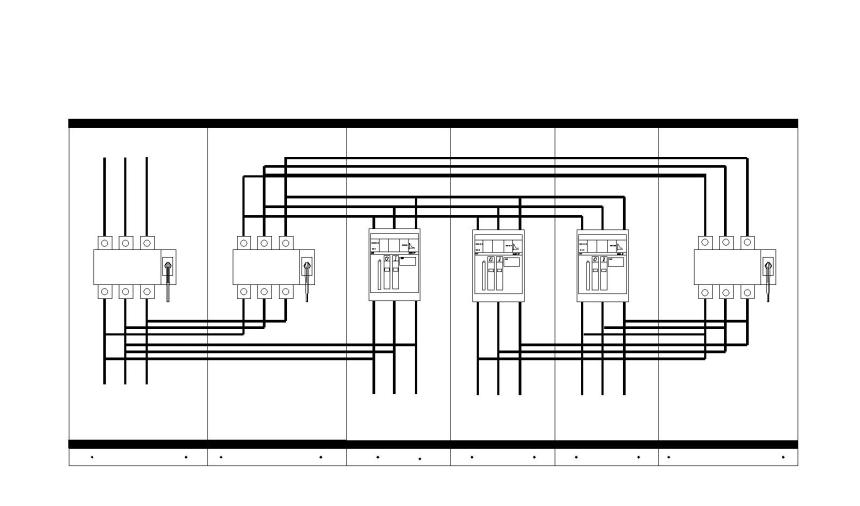
لوحة التحويل التوماتيكى ATS
لوحة التحويل التوماتيكى ATS أى منظومة تغذية كهربية مهمة ( مستشفى , سنترال , مكتب , مطار , أفران ثلاجات وخلافه ) لابد لها من تأمين بمصدر تغذية إحتياطى Emergency source...
الأرقام العربية
الأرقام العربيةقد لا يعلم كثير من الناس ان ما شاع بيننا بأنه الأرقام الإنجليزية هو فى الحقيقة إختراع عربى بجدارة حيث أنه لم يكن عند العرب أرقام ولكن كانت...

أنواع الصيانة وفوائدها
أى منظومة كهربية هى فى الأساس تمثل روح المنشأة التى تنتمى لها وبالتالى حدوث أى خلل بها يمثل جملة مخاطر وفنية وتنظيمية من تأخير الإنتاج أو تهالك المنظومة أو توقفها بالكلية...